Arthritis Disability Benefits in Louisiana: SSDI & SSI Help from a Monroe Attorney
Arthritis is one of the most common reasons Louisiana workers can no longer hold down a job. When joint pain, stiffness, and fatigue make it impossible to get through a full workday, Social Security disability benefits may be your best option for financial stability. This guide covers everything you need to know about qualifying for arthritis disability benefits in Louisiana, from medical evidence requirements to the appeals process, and how Coenen Law Firm in Monroe can help you at every stage.
Key Takeaways
-
Severe arthritis, including rheumatoid arthritis and osteoarthritis, can qualify for Social Security disability benefits when it prevents full-time work for at least 12 months. The Social Security Administration evaluates both the existence of a medically determinable impairment and the functional limitations it causes in daily work activities.
-
Coenen Law Firm in Monroe, Louisiana helps clients statewide with arthritis-based disability claims from the initial disability claim through all appeal levels, offering a free consultation and no fee unless benefits are awarded. Attorney Theodore "Ted" J. Coenen IV has over 20 years of experience fighting for disabled workers throughout North Louisiana.
-
Objective medical evidence is critical to disability approval for arthritis. This includes appropriate medically acceptable imaging like X-rays and MRIs, rheumatologist records, lab tests documenting inflammatory markers, and detailed functional assessments that show how arthritis affects your ability to work.
-
Approximately 65–70% of SSDI claims are initially denied in Louisiana, but having an experienced disability attorney who understands arthritis claims greatly improves the chances of eventual approval and backpay. Claimants with legal representation are three times more likely to be approved.
-
Ready to discuss your arthritis disability claim? Call Theodore "Ted" J. Coenen IV at (318) 322-7004 or message us online through our contact form for a free case review.

Arthritis and Disability Benefits in Louisiana: How the System Works
Arthritis is one of the leading causes of work disability across the United States, and chronic pain affects thousands of Louisiana workers annually. When joint damage and inflammation reach a point where you cannot perform basic work activities, two federal programs may provide the financial lifeline you need: Social Security Disability Insurance (SSDI) and Supplemental Security Income (SSI).
Disability benefits for arthritis are primarily based on two programs: SSDI and SSI. In Louisiana, disability benefits for arthritis are administered through federal programs. Louisiana does not have a separate state-funded disability program for adults. Instead, residents in parishes like Ouachita, Union, Morehouse, Richland, Caldwell, Jackson, and Lincoln apply through the Social Security Administration(Social Security Administration (SSA)), which handles these Louisiana claims through the federal system. Louisiana Disability Determination Services reviews medical claims locally as part of the federal process.
Here is the basic difference between the two programs:
| Feature |
SSDI |
SSI |
|---|---|---|
| Based on |
Work history and paid social security taxes |
Financial need (limited income/resources) |
| Work credits required |
Yes |
No |
| Income/asset limits |
No |
Yes |
| Includes health insurance |
Medicare (after 24-month waiting period) |
Medicaid (typically immediate) |
SSDI requires that you have paid social security taxes through your work history. SSI is a needs-based program for individuals with limited income and financial resources, including those who have not earned enough work credits. Either program can provide monthly SSDI benefits to people whose arthritis prevents them from earning a living.
Coenen Law Firm regularly assists people whose chronic pain and joint damage from arthritis make it impossible to keep working in local jobs such as construction, plant work, trucking, retail, and healthcare support.
Does Arthritis Qualify for Disability Benefits Under SSA Rules?
Arthritis can qualify for Social Security Disability Insurance (SSDI) when it causes a severe impairment that prevents substantial gainful activity for at least 12 continuous months. SSDI requires a condition to last at least 12 months. Simply having a diagnosis written in your chart is not enough. The key question is how your symptoms and functional limitations affect your ability to work full time on a reliable schedule.
The SSA evaluates arthritis under musculoskeletal disorders listings in the Blue Book. These listings look for major joint dysfunction, abnormal joint motion, structural damage on imaging, and measurable restrictions in fine and gross movements. Inflammatory arthritis must meet specific criteria to qualify for SSDI, and cases involving rheumatoid or other autoimmune forms may also be evaluated under immune system disorders listings.
Your condition must affect major weight-bearing joints or upper extremities due to arthritis to satisfy listing requirements. Examples of work-related tasks arthritis may prevent include:
-
Standing more than 10–15 minutes at a time
-
Walking even short distances without an assistive device
-
Lifting more than 5–10 pounds
-
Typing, gripping tools, or performing fine motor skills tasks
-
Maintaining regular attendance due to unpredictable flare-ups
Even if you do not meet a specific medical listing, you may still be approved through a medical vocational allowance. This pathway considers your pain, functional limitations, age, education, and work history together. When the combination leaves you unable to perform any readily available job, SSA can still award benefits.
Types of Arthritis That May Qualify for Disability Benefits
Many forms of arthritis appear in Louisiana disability claims. The Social Security Administration focuses on severity and functional impact rather than the label alone. Here are the most common types relevant to SSDI and SSI claims:
-
Rheumatoid arthritis (RA): An autoimmune disease that causes inflammation in multiple joints. Rheumatoid arthritis is classified under immune system disorders by SSA and evaluated under listing 14.09. It can affect the immune system broadly, damaging joints, organs, and blood vessels.
-
Osteoarthritis (degenerative joint disease): The most common form. Osteoarthritis affects about 1 in 4 adults in the U.S. and primarily targets weight-bearing joints like knees and hips. It is evaluated under musculoskeletal criteria.
-
Psoriatic arthritis: An inflammatory condition linked to psoriasis. Psoriatic arthritis can qualify for Social Security disability benefits when joint damage and systemic symptoms are well documented.
-
Ankylosing spondylitis: A type of inflammatory arthritis primarily affecting the spine, often leading to fusion and severe mobility restrictions.
-
Post-traumatic arthritis: Develops after injury or work accident, causing progressive joint damage that worsens over time.
Coenen Law Firm often sees arthritis overlapping with other impairments like spine disorders, nerve damage, obesity, diabetes, and depression. Combined conditions can strengthen a disability claim because SSA must consider both the existence of each impairment and their collective impact on your ability to work.

When Is Arthritis "Severe Enough" to Count as a Disability?
SSA defines disability as a medically determinable impairment that prevents substantial gainful activity for 12 months or more, or that is expected to result in death. The Substantial Gainful Activity (SGA) limit in 2026 is set at $1,690 per month for non-blind individuals. If you earn above that amount, SSA generally considers you able to work and will deny your claim at the first step.
Chronic pain must last at least 12 months for SSDI eligibility. SSA looks at functional limitations rather than pain scores alone. What matters is what you can and cannot do over extended periods:
-
Can you sit, stand, or walk long enough to hold a full-time job?
-
Can you lift, carry, push, or pull objects required by typical work?
-
Can you use your hands to grip, type, write, or manipulate small objects?
-
Can you climb stairs, bend, kneel, or reach overhead?
-
Can you concentrate through pain and maintain a regular work pace?
Consider a warehouse worker who can no longer lift 20–50 pounds due to knee and back arthritis, or a cashier who cannot stand at the register all day because arthritis in the hips can severely limit mobility and work capacity. Chronic pain can hinder work capacity by causing unpredictable flare-ups that make attendance unreliable.
Severe fatigue from inflammatory arthritis, medication side effects such as drowsiness or immune suppression, and inflammation-related complications like anemia can further reduce your ability to work. These factors are all relevant to disability decisions.
If you are unsure whether your arthritis is severe enough, call (318) 322-7004 for a free consultation with Ted Coenen to discuss how SSA may view your specific limitations.
SSA's Five-Step Disability Evaluation for Arthritis
SSA evaluates claims using a five-step process. Every SSDI and SSI case in Louisiana follows this same sequence, whether the condition is rheumatoid arthritis, osteoarthritis, or another joint disorder.
-
Step 1 - Are you working above SGA levels? If your monthly earnings exceed $1,690 (2026), SSA considers you engaged in substantial gainful activity and will deny your claim.
-
Step 2 - Is your arthritis "severe"? Your physical impairment must cause more than a minimal effect on your ability to perform basic work activities such as lifting, standing, walking, and remembering.
-
Step 3 - Does it meet or equal an SSA listing? SSA checks whether your arthritis meets the medical criteria in the Blue Book listings for musculoskeletal disorders or immune system disorders.
-
Step 4 - Can you perform your past relevant work? Using your residual functional capacity assessment, SSA determines whether you can still do jobs you held in the last 15 years.
-
Step 5 - Can you adjust to any other work? SSA considers your age, education, work history, and RFC to determine if there is any other work you could realistically do.
Many arthritis cases are approved at Steps 4 or 5 through medical vocational allowance, especially for claimants over age 50 who have limited education or a history of physical labor. SSA relies heavily on residual functional capacity assessments in arthritis cases to decide what a person can or cannot do on a sustained basis. A disability lawyer can help present the RFC evidence in a way that aligns with SSA rules and Louisiana job realities.
Medical Evidence: What You Need to Prove Arthritis Disability
Strong, detailed medical documentation is often the difference between approval and denial. SSA requires objective medical evidence to support chronic pain claims, and vague records lead to denials.
Here are the key medical records SSA expects to see:
-
Rheumatologist notes and orthopedic records
-
Primary care visit records with clinical findings
-
Hospital and ER records for severe flare-ups
-
Physical therapy notes from your physical therapist
-
Pain clinic records, if applicable
-
Doctor's notes documenting your medical treatment plan and response
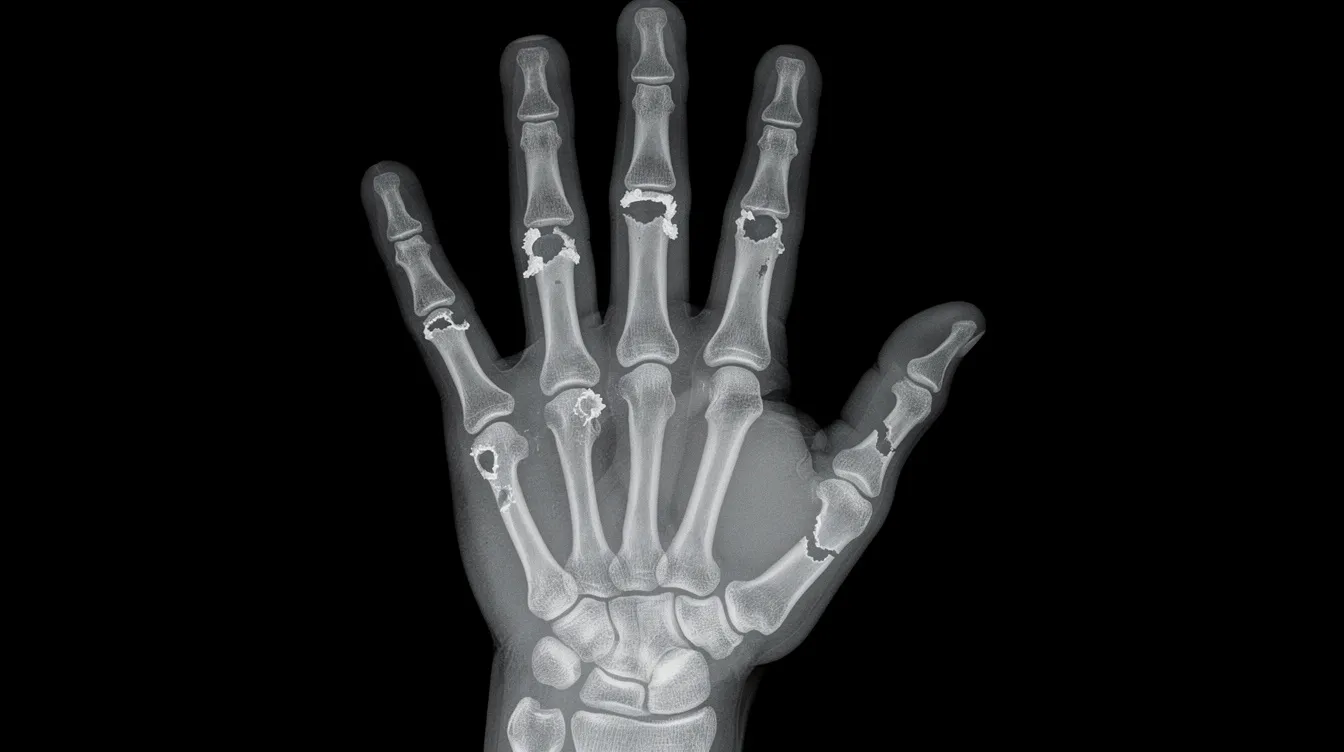
Imaging studies must document joint damage for arthritis claims. Medically acceptable imaging such as X-rays, MRIs, CT scans, and ultrasound should show damage in the affected joints, including joint space narrowing, bone spurs, erosions, fusion, or other structural damage. Imaging tests provide the objective foundation SSA needs to confirm a qualifying disability.
For inflammatory arthritis and rheumatoid arthritis, laboratory results must document inflammatory markers for RA claims. Key bloodwork includes:
-
Rheumatoid factor (RF)
-
Anti-CCP antibodies
-
Erythrocyte sedimentation rate (ESR)
-
C-reactive protein (CRP)
-
ANA and HLA-B27 (when relevant)
Medical records must show ongoing treatment for arthritis. Consistent treatment over time - medications, injections, surgeries, bracing, and physical therapy - demonstrates to SSA that you are doing your best but still cannot maintain full-time work. Gaps in treatment history can hurt your case unless you have a documented reason such as lack of health insurance or inability to reach your healthcare providers.
Functional Limitations and Residual Functional Capacity (RFC)
SSA cares most about what you can still do despite arthritis, and this is captured in the residual functional capacity assessment. RFC assessments must detail physical limitations due to arthritis, translating your medical history into specific work-related restrictions.
Common functional limitations that should be addressed include:
-
How long you can sit, stand, and walk continuously
-
How far you can walk before needing to rest
-
Maximum weight you can lift or carry
-
How frequently you need to change positions
-
Whether you require a cane, walker, or braces
Upper-extremity limitations are especially important for people with rheumatoid arthritis and hand osteoarthritis. Difficulty gripping, typing, buttoning clothing, writing, or using tools directly affects your capacity for fine and gross movements required by most jobs.
Non-exertional issues also matter. Needing unscheduled breaks, missing work several days per month for medical appointments or flares, and losing focus due to chronic pain or medication side effects can each eliminate your ability to sustain competitive employment. Personal pain journals can support claims by detailing daily limitations and providing a consistent record of how arthritis affects your routine.
Treating doctors should complete detailed RFC forms or narrative letters explaining these limitations in everyday terms. Coenen Law Firm works with clients' doctors to obtain this necessary medical evidence and ensure nothing critical is left out.
The Application Process for Arthritis Disability Benefits in Louisiana
You can start a disability claim for arthritis in several ways: filing online at SSA.gov, by phone with Social Security, or in person at a local social security office that serves Monroe and surrounding parishes. The initial processing time for disability claims in Louisiana typically takes 6 to 10 months.
SSA will ask for:
-
Personal details and contact information
-
A detailed list of all medical providers, medications, and imaging tests
-
Diagnostic tests, surgeries, and hospital stays
-
A complete work history for the past 15 years, including job duties and physical requirements
-
Descriptions of your daily activities and limitations
The quality of the initial application matters enormously. Vague or incomplete descriptions of arthritis symptoms and functional limitations often lead to denial. Instead of simply writing "back pain" or "arthritis" on forms, describe in concrete terms what tasks you can no longer do: "I cannot stand at the stove long enough to cook a meal," "I drop cups because my grip fails," or "I need to lie down two to three times a day because of joint pain and fatigue."
Residents of Monroe and across North Louisiana should consider contacting Coenen Law Firm before or soon after filing the application process so a disability lawyer can help avoid common mistakes that lead to early denials.
What Happens If Your Arthritis Disability Claim Is Denied?
Most arthritis-based disability claims in Louisiana are denied at the initial level. Approximately 65–70% of SSDI claims are initially denied in Louisiana. But a denial does not mean your case is over. The appeals process offers multiple opportunities to present stronger evidence.
The main appeal stages are:
-
Reconsideration- If denied, applicants have 60 days to file a reconsideration appeal. A different reviewer examines your file.
-
Administrative Law Judge (ALJ) hearing- You testify about your chronic pain, functional limitations, and daily life. The judge reviews new medical evidence and may hear from medical and vocational experts. Louisiana hearing offices show an allowance rate of approximately 45% at this stage.
-
Appeals Council review- If the ALJ denies your claim, you can ask the Appeals Council to review the decision.
-
Federal district court- In rare cases, you can appeal to federal court if all administrative options are exhausted.
The ALJ hearing is often the best chance to win an arthritis case because you can explain how your condition truly affects your day-to-day life. Missing an appeal deadline can force you to start over and may cost months or years of disability backpay.
If you have received a denial, call (318) 322-7004 quickly so Ted Coenen can review the denial letter, plan an appeal, and help gather stronger evidence.
How a Monroe Disability Lawyer Helps with Arthritis Claims
Theodore "Ted" J. Coenen IV has spent over 20 years representing disabled workers in Monroe and throughout North Louisiana in Social Security disability cases. His family has served the region's legal community for more than 70 years, and that deep local knowledge translates into better case preparation and hearing outcomes.
Here is how an experienced disability attorney helps with arthritis claims:
-
Reviewing your medical records for gaps that could lead to denial
-
Coordinating with treating doctors to obtain detailed function reports and RFC opinions
-
Preparing you for ALJ testimony about chronic pain and daily limitations
-
Filing appeals on time to protect your right to backpay
-
Representing you at hearings with a strategy tailored to your specific case
Coenen Law Firm understands local job demands in parishes like Ouachita, Union, Morehouse, Richland, Caldwell, Jackson, and Lincoln. That knowledge is essential when arguing that a client cannot realistically return to prior work or adjust to other jobs given their arthritis-related functional limitations.
Attorney fees in Social Security disability cases are contingency-based and regulated by federal law - generally a percentage of backpay only if the claim is successful. There are no up-front fees.
Ready to take the next step? Call (318) 322-7004 or send a secure message through the firm's online contact form to discuss your arthritis disability claim in a free consultation.
Combining Arthritis with Other Conditions in Your Disability Claim
Many Louisiana claimants with arthritis also suffer from other medical problems. SSA must consider the combined effect of all impairments on your ability to work, even if no single condition alone meets a listing.
Common co-occurring conditions include:
-
Spine disorders and degenerative disc disease
-
Neuropathy (nerve damage)
-
Diabetes
-
Heart disease
-
Obesity (which increases joint stress and can amplify pain)
-
Depression and anxiety
-
Autoimmune or immune system conditions like lupus
Chronic pain from arthritis often leads to sleep disruption and mental health symptoms, which can further reduce your reliability and productivity at work. These are not separate issues - they compound each other, and SSA is required to consider them together.
When filing your disability claim, disclose all physical and mental conditions on your forms and seek consistent treatment so the medical record reflects the full picture of how arthritis affects your life. Coenen Law Firm evaluates the entire medical profile, not just arthritis, to build the strongest possible SSDI or SSI case.
SSDI vs. SSI for Arthritis: Work Credits, Income, and Assets
Understanding the difference between these two programs matters because it determines both your eligibility and your benefit amount.
SSDI (Security Disability Insurance SSDI) is insurance you pay into through work. Every paycheck where you paid social security taxes built up work credits. SSDI requires 40 work credits, typically 10 years of work, with at least 20 credits earned in the 10 years before your disability began. Younger workers may qualify with fewer credits.
Supplemental Security Income (SSI) is a safety-net program for people with very low income and few resources. To qualify for arthritis disability benefits through SSI, you must meet general financial and medical criteria. SSI has strict income and resource limits - for example, $2,000 in countable resources for individuals and $3,000 for couples.
It is possible for some claimants with severe arthritis to be eligible for both SSDI and SSI, depending on their insured status and financial situation. SSD benefits through either program require proof that your arthritis prevents you from earning a living.
If you are unsure which program you qualify for, contact Coenen Law Firm for a personalized review of your work credits, work history, and finances.
Local Focus: Arthritis Disability Claims in North Louisiana
Coenen Law Firm is located at 1896 Hudson Circle, Suite 2, Monroe, Louisiana 71201, and represents clients throughout North Louisiana. The firm serves Ouachita, Union, Morehouse, Richland, Caldwell, Jackson, and Lincoln parishes.
Typical job types in these parishes include oilfield support, manufacturing, logging, trucking, construction, farm work, and retail. These physically demanding roles often become impossible when arthritis causes joint pain, stiffness, limited mobility, and severe fatigue. A person who spent 20 years driving a truck or working a plant floor cannot simply switch to a desk job - and SSA's medical vocational rules recognize that reality.
Local familiarity with nearby hospitals, clinics, rheumatology practices, and imaging centers helps the firm efficiently obtain medical records and understand typical treatment patterns for arthritis patients in the region. Knowing the regional Social Security hearing offices, administrative law judges, and vocational experts also makes a real difference in hearing preparation and strategy. Louisiana hearing wait times range from approximately 236 days to 321 days depending on location.
Schedule an in-person or phone consultation by calling (318) 322-7004 or reaching out through the firm's online contact page.

When to Call a Disability Lawyer About Your Arthritis Claim
The best time to speak with a disability lawyer is as soon as arthritis starts threatening your steady employment - not just after a denial letter arrives.
Legal advice is especially important when you are experiencing:
-
Multiple failed attempts to keep working despite worsening joint pain
-
Frequent absences or write-ups due to chronic pain and medical appointments
-
Being forced to reduce hours because you physically cannot get through a full shift
-
A notice of denial from SSA on an existing claim
Early involvement allows Ted Coenen to help shape the medical record, clarify functional limitations with your doctors, and identify which imaging tests or specialist referrals might strengthen the case before a decision is made.
A free consultation does not obligate you to hire the firm. It simply gives you a clear plan for the SSDI or SSI application process, the appeals process, and realistic timelines.
If arthritis is keeping you from earning a living, do not wait. Call Theodore "Ted" J. Coenen IV at (318) 322-7004 or send a message through the firm's contact form to get started with your free case evaluation today.
Frequently Asked Questions About Arthritis Disability Benefits in Louisiana
Can I get disability if my arthritis pain is severe but my X-rays or MRIs are "mild"?
SSA looks at the entire record, not just imaging. Clinical exam findings such as swelling, reduced range of motion, persistent inflammation, and credible reports of chronic pain are all relevant to your disability claim. Appropriate medically acceptable imaging is important, but some people experience significant pain and functional loss despite only moderate changes on X-ray or MRI, especially with inflammatory arthritis. Maintain consistent treatment and have your doctors document specific functional limitations in their notes. Contact Coenen Law Firm if you need help presenting this objective medical evidence effectively.
Will SSA consider the side effects of my arthritis medications?
Yes. SSA must consider side effects such as fatigue, drowsiness, stomach issues, immune system suppression, or concentration problems when evaluating your overall ability to work. Make sure you tell your doctors about every side effect so they are clearly recorded in your medical treatment notes. These details can then be discussed in disability forms and hearing testimony. Coenen Law Firm often highlights medication side effects in arthritis cases to show why full-time employment is unrealistic.
Can I work part-time and still qualify for arthritis disability benefits?
Limited part-time work may be allowed as long as your monthly earnings stay below the SGA limit. In 2026, that threshold is $1,690 per month. However, working too much or performing duties that conflict with your claimed limitations can hurt your case, even if earnings are modest. Before taking on any part-time work while applying for SSDI or SSI, talk with a disability lawyer to understand the risks and rules. The wrong activity at the wrong time can undermine months of effort on your claim.
How long does it take to get a decision on an arthritis disability claim in Louisiana?
The initial processing time for disability claims in Louisiana typically takes 6 to 10 months. If denied and you request reconsideration, add a few more months. An ALJ hearing date can take an additional year or more depending on the hearing office backlog. However, approved claimants can receive SSDI backpay dating back to the established onset date of disability, minus the mandatory five-month waiting period. File as early as possible, respond promptly to SSA requests, and work with an attorney to keep the process on track.
Do I need a local Monroe disability attorney, or can I use a national firm for my arthritis case?
While claimants can technically hire firms from anywhere, a local Monroe-based disability attorney provides advantages that matter at hearing time. Ted Coenen knows the local administrative law judges, vocational experts, and common job demands across North Louisiana. That firsthand knowledge shapes hearing strategy in ways a national call-center firm simply cannot replicate. Coenen Law Firm offers personal, one-on-one legal representation rather than passing your case between multiple handlers. If you are struggling to work because of arthritis anywhere in Louisiana, contact the Monroe office by phone at (318) 322-7004 or online for experienced Social Security disability representation.