Hearing Loss Disability Benefits Louisiana: SSDI & SSI Help From a Monroe Attorney
Hearing loss can make it impossible to work safely, communicate with coworkers, or follow instructions on the job. If you or someone you love is dealing with severe hearing loss or deafness in Louisiana, Social Security disability benefits may be available through SSDI or SSI - and Coenen Law Firm in Monroe is here to help you pursue them.
Key Takeaways
-
Serious hearing loss or deafness can qualify for Social Security disability benefits in Louisiana. The Social Security Administration evaluates hearing loss under Blue Book Listings 2.10 and 2.11, which set strict thresholds for decibel levels in the better ear, word recognition scores, and cochlear implant outcomes. Coenen Law Firm in Monroe helps clients across North Louisiana apply for and appeal hearing loss disability claims.
-
Meeting a Blue Book listing can lead to faster approval, but many claims succeed through a residual functional capacity analysis showing that the applicant cannot sustain full-time employment despite treatment with hearing aids, cochlear implants, or other assistive devices. Medical evidence from licensed audiologists and ENT specialists is the foundation of every strong claim.
-
People in Ouachita, Union, Morehouse, Richland, Caldwell, Jackson, and Lincoln Parishes can call (318) 322-7004 or message us online for a free case evaluation about hearing loss disability benefits.
-
Many hearing loss claims are initially denied - SSA denies about 67% of all disability applications at the initial stage. But a strong disability claim with complete audiology records, assistive devices history, and testimony about work limits can win on appeal, especially with legal representation.
-
Attorney fees in Social Security cases are contingency-based and typically paid from past-due back pay only if benefits are awarded. There is no upfront legal fee to talk with Ted Coenen about your situation.
Is Hearing Loss Considered a Disability Under Social Security Rules?
Hearing loss can be a qualifying disability when it is severe, long-term (lasting at least 12 months or expected to result in death), and prevents you from performing substantial gainful work. Both SSDI and SSI disability benefits are available to people whose hearing impairment meets these standards. Eligibility for disability benefits for hearing loss follows federal Social Security standards, and hearing loss benefits in Louisiana are primarily managed through these federal programs.
Hearing loss ranges from mild to moderate to severe to profound hearing loss. The Social Security Administration does not focus solely on a diagnosis name - it looks at how your hearing loss affects your ability to hold down a job full-time. Someone with moderate loss who works in a quiet office may not qualify, and hearing loss in one ear alone usually is not enough because the SSA focuses on severe impairment in the better ear, while someone with severe hearing loss who worked in a noisy plant may have a strong claim.
The SSA uses the Blue Book Listing 2.10(hearing loss not treated with cochlear implantation) and Listing 2.11 (hearing loss treated with cochlear implantation) to determine whether an applicant can automatically qualify. If your hearing loss does not meet a listing, hearing loss qualify may still depend on reduced residual functional capacity limits and an inability to do past work or any other work available in the national economy.
If you are a Louisiana worker who is deaf or hard of hearing, call (318) 322-7004 to find out whether your hearing loss could qualify as a disability.
How the SSA Uses the Blue Book to Evaluate Hearing Loss
The SSA Blue Book is the official medical guide used nationwide - including in Louisiana - to decide if a medical condition is severe enough to qualify for disability benefits automatically. Think of it as a checklist of medical criteria that, if met, lead to approval without needing to analyze your job skills or education.
For adult hearing loss, the key listings are 2.10 (no cochlear implant) and 2.11 (with cochlear implant). The SSA evaluates hearing loss based on specific medical criteria outlined in the Blue Book, relying heavily on audiometric testing, decibel thresholds, and word recognition scores in the better ear. The SSA evaluates hearing loss under Listings 2.10 and 2.11 specifically.
Children's hearing loss is evaluated under separate childhood listings, but this article focuses on adults of working age in Louisiana. The Blue Book is publicly available on SSA's website, and Coenen Law Firm can interpret how these technical rules apply to your individual hearing records and work background.
Meeting a Blue Book listing can speed up your approval. But many claims are decided using an RFC analysis when the listing criteria are not exactly met - so a denial at the listing level does not mean the end of your case.
Medical Qualifications for Hearing Loss Disability Benefits
Medical evidence is the backbone of any disability claim. The SSA requires detailed medical evidence for hearing loss claims, and that evidence must come from licensed physicians and audiologists who follow SSA testing standards. Documentation from licensed specialists is required for the evaluation of hearing loss applications.
The core tests the SSA expects include:
-
Pure tone air conduction and bone conduction audiometry
-
Speech reception threshold testing
-
Word recognition testing using a standardized list of phonetically balanced monosyllabic words
The SSA evaluates hearing both with and without hearing aids or other electronic devices. In fact, since 2010, SSA removed the requirement that hearing aid use be factored into meeting listing thresholds - but they still consider the limited benefit some people receive from hearing aids when assessing overall function.
SSA looks for consistent test results over time: multiple audiograms, ENT records, hearing aid fittings, cochlear implant reports, and documentation of tinnitus, dizziness, or balance issues where relevant. Your medical history should tell a clear story.
Monroe-area claimants should bring their audiograms, hearing aid records, and ENT notes to a free consultation so Ted can compare them to Listing 2.10 or 2.11 requirements.
Qualifying for Disability Without a Cochlear Implant (Listing 2.10)
Listing 2.10 applies to claimants whose hearing loss has not been treated with cochlear implants but is still very severe in the better ear. To qualify under Listing 2.10, air conduction and bone conduction thresholds must meet specific decibel levels.
The medical criteria under Listing 2.10 require one of the following in the better ear:
-
An average air conduction hearing threshold of 90 decibels or greater at 500 Hz, 1,000 Hz, and 2,000 Hz, and a bone conduction hearing threshold averaging 60 dB or greater at those same frequencies
-
A word recognition score of 40% or less using a standardized list of phonetically balanced monosyllabic words
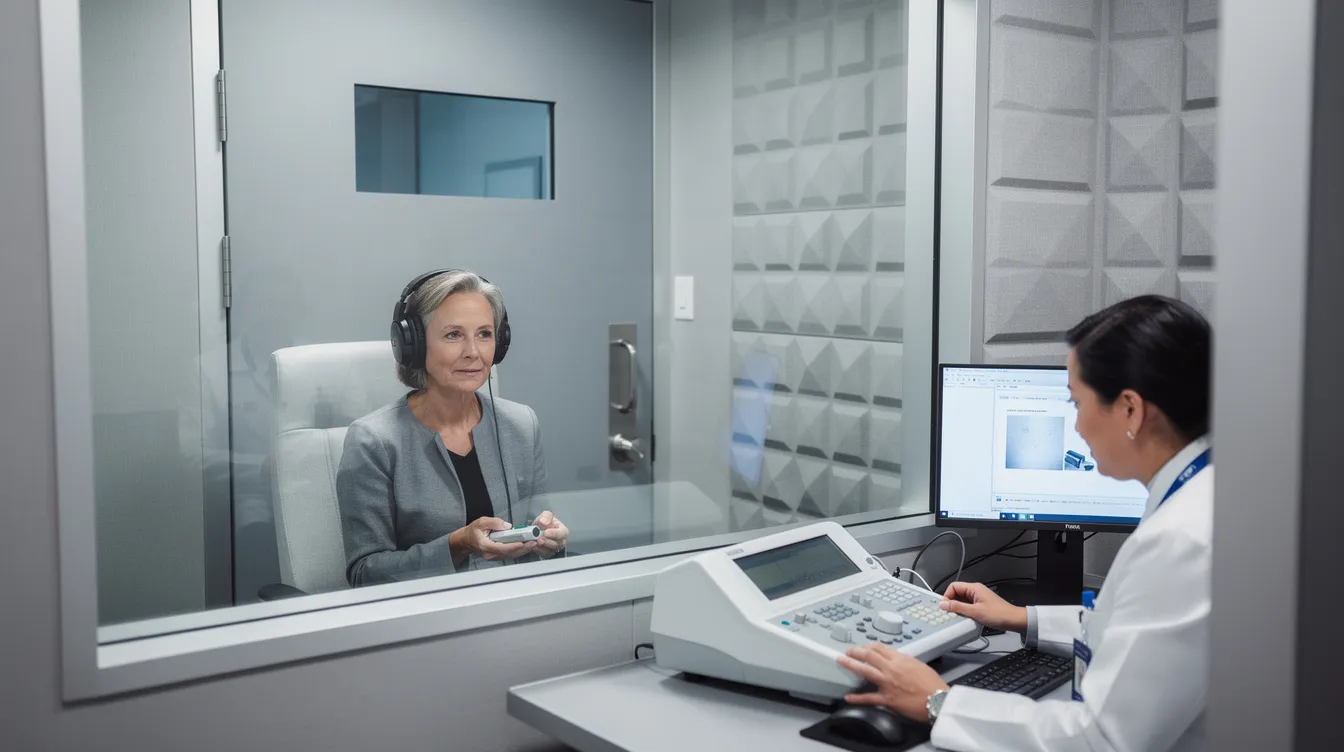
Hearing loss must average 90 decibels or greater to qualify under the first pathway. These tests must be done by a qualified audiologist in a sound-treated room and properly documented for Social Security to accept them as objective evidence.
These numbers are strict. Many people with serious hearing problems do not reach them. But failing to meet Listing 2.10 does not end the disability claim - it shifts the evaluation to an RFC analysis, where SSA considers the full picture of how your hearing loss limits your ability to work.
If you believe your average threshold or word recognition scores fall near these levels, call (318) 322-7004 for help reviewing your audiology reports against the exact SSA standards.
Qualifying for Disability With a Cochlear Implant (Listing 2.11)
A cochlear implant is an advanced assistive device that can help many people hear better, but it does not always restore enough hearing to work safely and consistently. Cochlear implantation is a major step, and the SSA recognizes the significant adjustment period involved.
Under Blue Book Listing 2.11, a person treated with a cochlear implant is considered disabled for 12 months after the initial implantation surgery. Cochlear implant recipients qualify for SSDI for one year post-surgery, providing an automatic qualification window during the recovery and adjustment period.
After the first 12 months, SSA administers the Hearing in Noise Test (HINT) or a comparable noise test. Benefits typically continue if the word recognition score is 60% or less when tested in a quiet sound field at 60 dB hearing level, properly amplified, without visual cues.
Implant surgery records, activation and mapping notes, and follow-up audiology tests are critical evidence for demonstrating your current hearing level despite the implant. Simply having the device is not enough beyond the first post-implant year unless performance remains limited.
Anyone in North Louisiana who has received a cochlear implant and can no longer work should contact Coenen Law Firm to discuss whether they automatically qualify and how long their benefits might last.

Hearing Loss Disability Claims When You Don't Meet a Blue Book Listing
Many hearing loss claims are approved because the person cannot sustain competitive employment, even though Listing 2.10 or 2.11 is not exactly met. This is where residual functional capacity comes in. An RFC assessment captures what you can and cannot do in a work setting despite your hearing impairment, and some people with hearing loss qualify for benefits when communication or safety limits prevent past work or adjustment to other jobs.
SSA considers specific communication challenges when building an RFC, including:
-
Inability to hear supervisors' instructions
-
Trouble using phones, radios, and video meetings
-
Missing alarms, safety warnings, and backup signals
-
Difficulty understanding speech in noisy environments like plants or warehouses
RFC also accounts for related symptoms. Dizziness from conditions like Ménière's disease, chronic tinnitus, or balance issues can further limit job opportunities - ruling out driving, working at heights, or operating heavy machinery.
Social Security compares your RFC to past jobs and other work available in the national economy. The decision maker gives special consideration to older workers (ages 50–60+) with limited education or no transferable skills. If no suitable work exists, benefits are awarded.
Coenen Law Firm develops detailed RFC evidence through treating doctor statements, audiology reports, and testimony about daily activity limits to demonstrate why a claimant cannot reliably perform full-time work, and claimants who are initially denied can still prove disability through stronger RFC evidence on appeal.
How Hearing Loss Affects the Ability to Work in Louisiana Jobs
North Louisiana's economy relies heavily on industries where hearing is critical to safety and productivity. Construction, oilfield support, logging, manufacturing, trucking, warehouse work, healthcare aide positions, and customer service roles all demand reliable hearing - and hearing loss creates real barriers in every one of them.
Common work-related problems include:
-
Missing backup alarms, sirens, and emergency warnings
-
Being unable to understand coworkers in loud plants or job sites
-
Difficulty using two-way radios, phones, or communication systems
-
Misunderstanding customer requests, patient instructions, or medication directions
Even quieter jobs like office work, cashiering, or reception can be complicated when they require constant phone use, group meetings, or face-to-face communication. Hearing loss limits job options across the board.
Occupational noise-induced hearing loss may qualify for workers' compensation in Louisiana as well, which is a separate avenue Ted Coenen can evaluate alongside your Social Security claim. Social Security evaluates whether hearing aids, cochlear implants, or other assistive devices are enough to keep a job safe and productive. If they are not, disability benefits may be appropriate.
If you have been written up, demoted, or forced to quit because of hearing problems, document those events and share them with Ted Coenen in a consultation. That kind of other evidence from employers can make a real difference.
Required Medical Evidence for a Strong Hearing Loss Disability Claim
The SSA does not award disability benefits for hearing loss without detailed, objective medical documentation from acceptable medical sources. You need to provide medical evidence when applying for SSDI - and the strength of that evidence often determines whether your claim succeeds or fails.
Key types of evidence include:
-
Audiograms showing pure tone air conduction and bone conduction thresholds
-
Word recognition and HINT scores
-
ENT and audiologist treatment notes
-
Hearing aid evaluations and fitting records
-
Cochlear implant surgical and follow-up reports
-
Vestibular testing if balance is affected
-
Medical treatment records documenting ongoing care
Current testing matters. SSA typically wants audiograms and ENT exams within the last 6–12 months, supported by a consistent history of appointments, device adjustments, and recommended treatments.
Additional evidence beyond medical records can be powerful: employer write-ups, incident reports, statements from supervisors or coworkers, and testimony from family members describing how hearing loss affects safety and communication at home and in public.
Coenen Law Firm helps clients in Monroe, West Monroe, Ruston, Bastrop, Farmerville, Rayville, Columbia, and Winnsboro gather missing records and make sure the SSA receives complete audiology and medical files before any hearing.
SSDI, SSI, Work Credits, and Substantial Gainful Activity
Understanding the difference between SSDI and SSI is important when pursuing social security disability benefits for hearing loss.
| Feature |
SSDI |
SSI |
|---|---|---|
| Based on |
Work history and payroll taxes |
Financial need (income and resources) |
| Requires work credits |
Yes |
No |
| Health coverage |
Medicare (after 24 months) |
Medicaid (often immediate) |
| Monthly payment basis |
Past earnings |
Federal benefit rate |
SSDI requires sufficient work credits for eligibility. You earn up to four work credits per year based on annual earnings. The number of credits needed depends on your age at disability onset, but many long-time workers in North Louisiana logging, trucking, construction, and plant jobs already have enough.
SSI is a needs-based program focused on income and financial resource limits. SSI provides support for low-income individuals with disabilities who may not have enough work history for SSDI.
The SGA limit for SSDI is $1,620 per month as of 2026. If you are regularly earning above that amount, you generally will not qualify for social security disability insurance. For example, a warehouse worker earning $1,800 per month would exceed SGA and likely be ineligible, even with documented hearing loss.
Hearing loss must significantly limit work ability to qualify for SSDI. Coenen Law Firm reviews each client's earnings record, work credits, and current financial situation to determine whether SSDI, SSI benefits, or both may be available.
How to Apply for Disability Benefits for Hearing Loss in Louisiana
You can apply for SSDI online, by phone, or in person at local Social Security offices serving Monroe and surrounding parishes. The application options include:
-
Online at SSA.gov
-
By phone through SSA's national number
-
In person at one of Louisiana's 21 SSA field offices
Main forms and information needed include your disability application, work history report, adult function report, list of all medical providers and audiologists, and dates and locations of hearing tests and cochlear implant surgeries.
Incomplete or incorrect forms are a common reason for denial. Most SSDI claims are denied due to application errors, particularly in hearing loss cases where technical evidence like audiograms and word recognition scores must be submitted correctly. Louisiana DDS reviews applications and may request additional medical testing if necessary through consultative examinations at no cost to you.
Claims for disabilities due to hearing loss can take 3 to 6 months for a decision at the initial level. The overall SSDI application process can take 1-2 years when appeals are needed.
Contact Coenen Law Firm before filing if possible so Ted can help organize medical evidence, complete the disability claim paperwork, and reduce the risk of a preventable denial. Schedule a free consultation by calling (318) 322-7004 or using the firm's online contact form before or shortly after starting your application.

Appealing a Denied Hearing Loss Disability Claim
The reality is that 67% of SSDI applications are denied initially. Approval rates at initial SSDI applications in Louisiana are under 35%. Most SSDI claims are denied at initial application stages, including hearing loss claims - often due to insufficient medical evidence or misunderstandings about job demands.
The appeals process has four levels, each with a strict 60-day deadline after the denial notice:
-
Reconsideration- a fresh review by a different examiner
-
Hearing before an Administrative Law Judge (ALJ)- your strongest opportunity to present your case in person
-
Appeals Council review- the Appeals Council process allows a review of disability claims after denial at the ALJ level
-
Federal district court review- available if all administrative options are exhausted
You must file an appeal within 60 days of a denial. Missing this deadline can mean starting over from scratch.
The ALJ hearing stage is usually the best opportunity to present new medical records, detailed testimony about communication problems, and expert opinions. ALJ hearings typically last 30-60 minutes. Claimants often wait 12-24 months for ALJ hearing scheduling - claims can take 1-2 years to reach a hearing stage in Louisiana.
Represented claimants statistically have higher success rates. Legal representation increases SSDI approval rates to 60%, compared to much lower rates for unrepresented claimants. Legal representation helps organize medical evidence for hearings and present it in the format ALJs expect.
Coenen Law Firm prepares appeal briefs specifically addressing Blue Book criteria, RFC, and local vocational issues for Louisiana workers with hearing loss.
If you recently received a denial notice about a hearing loss disability claim, do not give up. Call (318) 322-7004 quickly so your appeal rights and potential back pay are protected.
Back Pay, Monthly Benefits, and Health Coverage for Hearing Loss
Social Security disability back pay can cover the period from the established onset date of disability up to the date of approval. For SSDI, there is a 5-month waiting period before benefits begin, but back pay can still be substantial if your onset date predates your application by months or years.
Here is what to expect for monthly benefits:
-
SSDI benefits average between $1,400 and $1,500 monthly, based on your work history and prior earnings. The maximum SSDI benefit in 2026 is approximately $4,152 for workers with strong earnings histories.
-
The maximum SSI payment is around $943 per month for individuals, before any state supplements. SSI payments depend on your financial situation and can be reduced by other income.
After a successful SSDI award, Medicare coverage typically begins 24 months after the first month of entitlement. Medicare can help pay for ENT visits, cochlear implants, and other medical treatment related to hearing loss.
Louisiana Medicaid may provide support for healthcare and equipment for eligible individuals, especially those receiving SSI benefits. Medicaid may help cover hearing aids and related care depending on provider availability and state Medicaid rules.
Coenen Law Firm helps clients understand how their disability benefits, back pay, and health coverage will change household finances and can estimate potential back pay once the SSA sets an onset date.
Why Work With a Louisiana Disability Lawyer for a Hearing Loss Claim?
Social Security's rules for hearing loss disability benefits are highly technical. A disability lawyer with extensive experience can translate complex audiology results and Blue Book standards into clear legal arguments that a decision maker understands.
Key tasks Ted Coenen handles for hearing loss claims:
-
Gathering and updating medical and audiology records
-
Ensuring audiometric testing meets SSA requirements
-
Preparing hearing briefs that address Listing 2.10, 2.11, and RFC
-
Presenting testimony about how hearing loss limits past work and other jobs
-
Advising on how maintaining employment (or inability to maintain it) factors into the claim
Coenen Law Firm represents claimants at ALJ hearings throughout Louisiana, including clients from Ouachita, Union, Morehouse, Richland, Caldwell, Jackson, and Lincoln Parishes, as well as by phone or video where available.
Attorney fees in Social Security cases involve no upfront cost. The fee is generally limited to 25% of past-due back pay up to the SSA's current cap and is paid only if benefits are awarded. SSA withholds it directly from back pay - you never write a check.
Call (318) 322-7004 or send a secure message online for a free hearing loss disability case evaluation with Ted Coenen in Monroe.

Serving Monroe and Communities Across North Louisiana
Coenen Law Firm is based in Monroe, Louisiana, and focuses on Social Security Disability and Workers' Compensation. Ted Coenen has been advocating for injured workers and families in the region since the mid-1990s, bringing deep experience to every case.
The firm serves hearing loss disability claimants across a wide geographic area:
-
Cities: Monroe, West Monroe, Ruston, Bastrop, Farmerville, Rayville, Columbia, Winnsboro
-
Parishes: Ouachita, Union, Morehouse, Richland, Caldwell, Jackson, Lincoln
Ted's local knowledge of common industries, job demands, and medical provider networks in North and Central Louisiana directly strengthens his ability to explain work limitations to judges. He understands the types of jobs clients have held and why hearing loss makes those jobs impossible.
Consultations can be done by phone, video, or in-office at the Monroe location - making it convenient even for clients in rural parishes with limited transportation.
Residents from anywhere in Louisiana can call (318) 322-7004 to see if Coenen Law Firm can help with their hearing loss disability claim or appeal.
Contact Coenen Law Firm About Hearing Loss Disability Benefits in Louisiana
Significant hearing loss can upend your ability to work, your finances, and your daily safety. Social Security disability benefits can provide critical monthly income, back pay, and health coverage when you need it most.
Ted Coenen personally handles Social Security Disability cases - including those involving hearing loss - from the initial disability claim through SSDI appeals and ALJ hearings. You will work directly with Ted, not a paralegal or case manager handling your case in the background.
Call (318) 322-7004 today for a free consultation about hearing loss disability benefits, or message the firm online any time. There is no attorney fee unless disability benefits are awarded, and early legal help can protect your appeal deadlines and maximize potential back pay.
Family members or caregivers are encouraged to reach out on behalf of a loved one with severe hearing loss who may be hesitant or unable to handle the process alone. The consultation is free, and it could be the first step toward receive benefits that change your family's financial future.
Frequently Asked Questions About Hearing Loss Disability Benefits in Louisiana
Does hearing loss automatically qualify me for Social Security disability benefits?
Hearing loss in one ear does not automatically qualify you in every case because SSA applies strict standards based on the better ear. Only people who meet strict Blue Book criteria under Listing 2.10 or 2.11 - or whose hearing loss prevents all substantial gainful work despite medical treatment - will receive disability benefits. SSA reviews your test results, work history, age, education, and how well hearing aids or a cochlear implant improve your communication when making this determination. If you medically qualify under a listing, the process moves faster, but some people with hearing loss qualify through an RFC analysis showing they cannot sustain employment.
Can I work part-time and still receive disability benefits for hearing loss?
Limited part-time work may be allowed as long as your earnings stay below the Substantial Gainful Activity amount ($1,620 per month in 2026) and the work does not demonstrate the ability to perform full-time competitive employment. Earning above SGA can cause denials or termination of social security benefits. Before starting any job while a hearing loss claim or appeal is pending, speak with Coenen Law Firm to understand how it could affect your case.
Will Social Security pay for my hearing aids or cochlear implant?
Social Security disability benefits themselves do not directly purchase hearing aids or a cochlear implant. Instead, they provide monthly cash benefits and access to Medicare or Medicaid that may help cover these costs through separate programs. SSA considers hearing aids and assistive devices when evaluating how well you function, but they are not provided as accommodations under SSA rules. After 24 months on SSDI, Medicare may cover some hearing-related medical costs.
How long does it take to get a decision on a hearing loss disability claim in Louisiana?
Initial decisions on SSDI claims typically take 3 to 6 months. If the claim is denied and goes to an ALJ hearing, the entire process can take a year or more - Louisiana hearing offices currently average about 269 days from hearing request to decision. File as soon as work becomes impossible, and contact Coenen Law Firm early so medical evidence is gathered efficiently and the 60-day appeal deadlines are not missed.
Can veterans receive both VA disability compensation and Social Security benefits for hearing loss?
Veterans may qualify for VA disability compensation related to hearing loss from military service. VA benefits and Social Security disability benefits are separate programs, and in many cases you can receive both simultaneously. However, the application processes and medical criteria differ. Ted Coenen can help you understand how your SSDI or SSI claim fits alongside any VA benefits you may already receive.
What should I bring to my first meeting with a disability lawyer about hearing loss?
Bring recent audiograms, hearing aid or cochlear implant records, ENT and primary care notes, a list of medications, a summary of past jobs and work history, and any letters or write-ups from employers related to hearing problems. Even if you do not have all documents yet, Coenen Law Firm can request missing records once you sign medical release forms. The more information you bring to the free consultation, the faster Ted can evaluate whether you qualify for social security disability benefits.